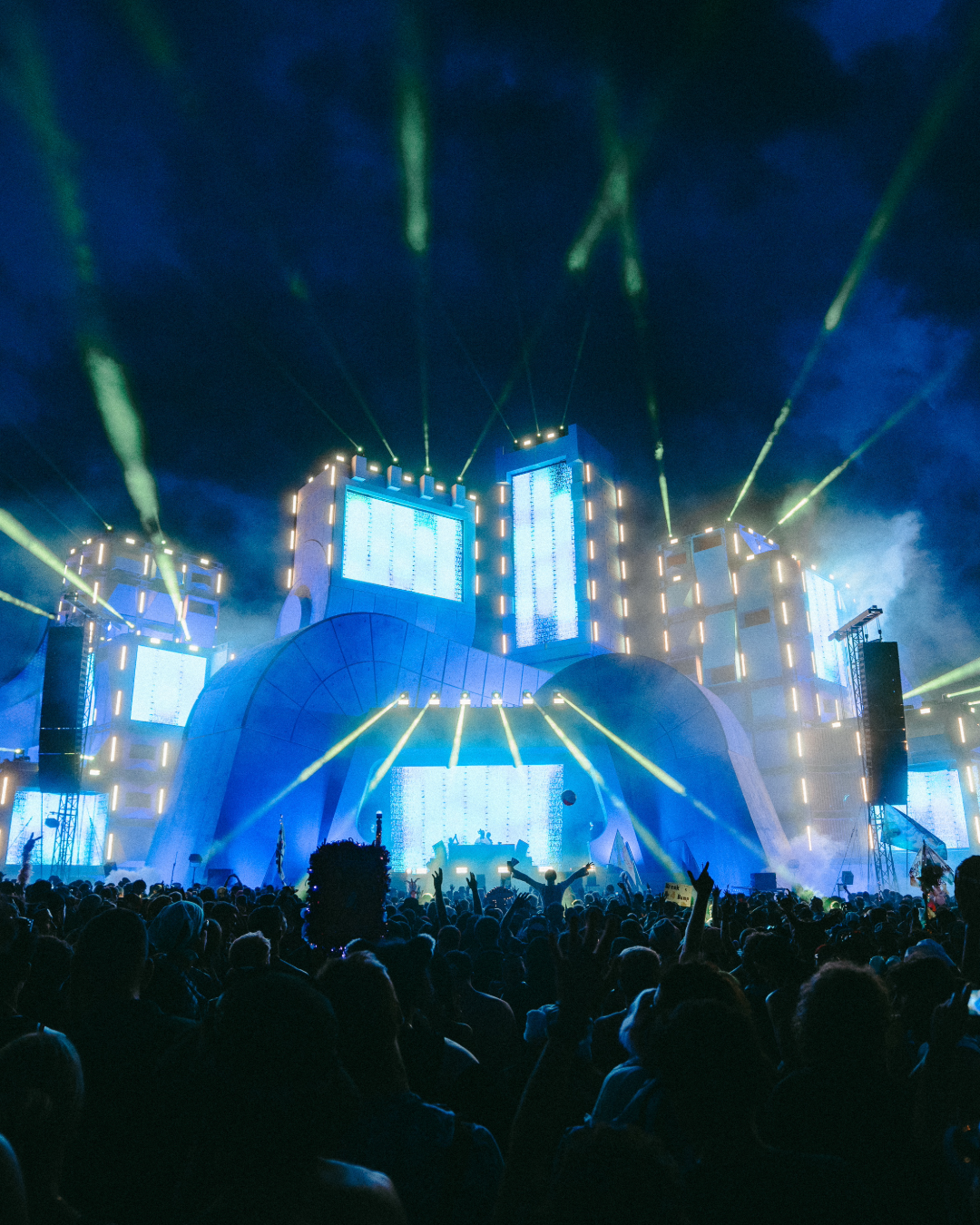
It All Started With A Soundsystem
Sound system culture isn’t just music; it’s a constantly evolving culture 🔊
Boomtown isn’t just about catching sets you already love; it’s about discovering where sounds come from and where they might take you next.
As you move through the festival, following basslines down side streets and into hidden corners, you’re stepping into a culture that’s shaped decades of music. Sound system culture sits at the heart of that journey, influencing everything from reggae and dub to jungle and modern bass music. This is the story of how those sounds were built, shared and tested on big systems, and why you hear their legacy everywhere at Boomtown today.

Born on the streets of Jamaica, soundsystem culture started with crews turning simple speaker boxes into mobile parties, bringing the community together, testing new sounds, and shaping music in real time.
From ska to rocksteady, reggae to dub, this was music made for the people, by the people, and it’s still alive today on stages at festivals like Boomtown.
At Boomtown, you’ve probably felt that energy from sound systems like Sinai, King Original and Trojan, blasting roots, dub and reggae into the woods and fields, and around each corner of each district, you’ll find a genre that stems from the sound system.
Roots And Revolution
The roots of soundsystem culture are in Jamaica. In Jamaica, sound system pioneers weren’t just DJs - they were community innovators and tastemakers. Arthur “Duke” Reid started as a police officer before helping in his wife’s grocery shop. He began DJing outside the shop and built his own sound system, The Trojan. Known for his sharp ear and competitive edge, Reid eventually turned The Trojan into Trojan Records. Trojan Records exported Jamaican hits worldwide and spread reggae and ska beyond the island.
Clement “Coxsone” Dodd began DJing in his parents’ liquor store before travelling to the US. He returned with R&B rhythms that shaped Studio One and helped launch artists like Bob Marley and Toots & the Maytals.
Reid and Coxsone were fierce rivals, pushing each other to innovate with exclusive tracks, bigger crowds, and bolder performances.
King Tubby, an electronics whiz, worked with both Reid and Dodd as an engineer on their sound systems. Using his technical skills, he invented dub by stripping recorded tracks, emphasising bass, and turning the mixing desk into an instrument.
Together, these three shaped sound system culture: Reid and Coxsone as selectors and producers, Tubby as the engineer and visionary, creating the foundation for the sounds you’ll experience at Boomtown today.
Sound System Culture In The UK
When people from Jamaica migrated to the UK between the 1950s and 70s, sound system culture accompanied them. It wasn't nostalgia, but a life-affirming practice.
In UK cities, sound systems became spaces where Caribbean communities could come together, celebrate their music, and heritage. It made a space for joy in a place that wasn’t always welcoming.
By the 1980s, sound systems in the UK were flourishing - rooted in Jamaican tradition but naturally taking on their own shape. Crews like Coxsone International, Jah Shaka, Channel One, and Uniq Uprising built sounds that were heavy with bass, rich with roots, and full of soul. They played reggae and dub, but were also part of a wider cultural exchange with emerging UK sounds.
This wasn’t imitation - it was evolution.
UK sound systems took the selecting, mixing and crowd‑reading instincts honed in Jamaica and fused them with the musical currents happening in the UK. In the process, it shaped the music being made in the UK.
Don Letts, a London DJ and filmmaker, famously brought reggae into the punk scene, spinning dub and roots tracks at clubs and introducing bands like The Clash and The Slits to Jamaican rhythms.
The Slits opened for Bob Marley and infused punk energy into reggae‑influenced performances, and the reggae legend even shouts out some British punk bands in Punky Reggae Party “I'm saying, The Wailers will be there, The Damned, The Jam, The Clash, Maytals will be there, Dr Feelgood too”.
Bass Weight, Rave Energy, Shared Roots
Throughout the 1990s, 2000s and into today, sound systems in both Jamaica and the UK have continued to evolve together.
In Jamaica, reggae and dancehall kept moving forward, constantly reshaping rhythm, production and voice. In the UK, sound systems pushed those ideas into new spaces - blending reggae’s bass-heavy traditions with rave culture, pirate radio and youth energy.That influence fed directly into Jungle. The focus on bass weight, MCs, sound-system pressure and dub techniques like echo and space became central to early jungle records.
Artists such as Goldie, who came out of the UK rave and bass scene, have often spoken about jungle’s roots in sound-system culture and reggae’s influence on how the music felt on big systems, not just how it sounded on record.
This shared DNA is why Jungle and today’s bass music still carry the spirit of sound systems - music built to move bodies, tested on big speakers, and shaped by the crowd.
Sound system culture has always been about innovation in real time, from the early days of ska and reggae in Jamaica, through dub’s studio experiments, to the UK’s punk-reggae crossover, jungle, and modern bass music.
Its influence is everywhere; you hear bass treated as a physical force, MCs guiding the crowd, and music tested on big speakers before it reaches the wider world.
At Boomtown, that lineage is alive. The reggae, dub, jungle and bass-driven sounds all connect back to the communal, crowd-responsive way sound systems have always shaped music. It shows that this culture is not just history, but a living, evolving force that continues to inspire new genres today.
More News