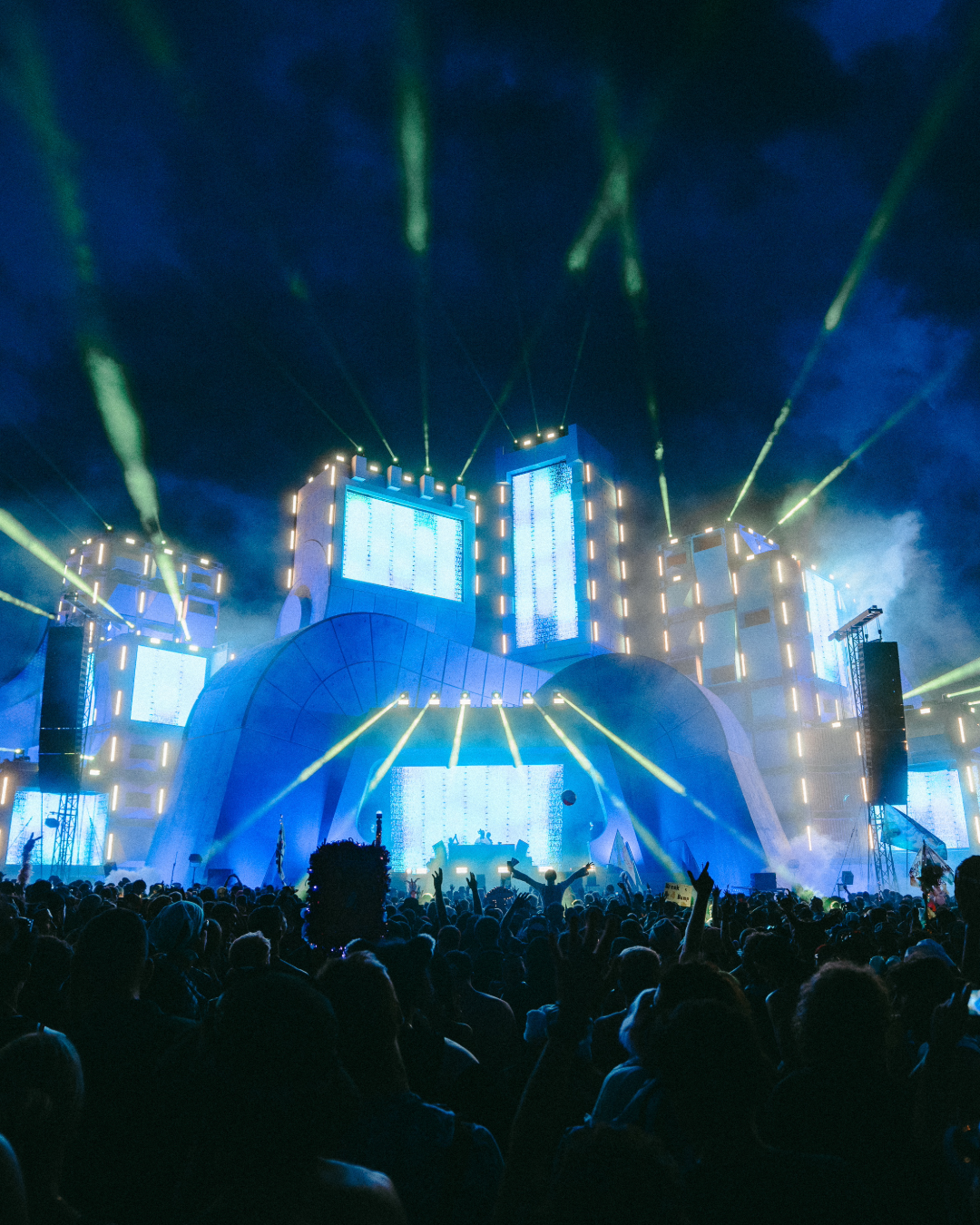
House Vs DnB | The Blueprint and The Breaks
At first glance, House and Drum and Bass appear to sit at opposite ends of dance music culture. One is commonly associated with warmth, repetition and the communal uplift of the dancefloor; the other is associated with speed, pressure and a darker, more intense energy.
House grew into an international club language, while Drum and Bass remained fiercely local, shaped by pirate radio, warehouse spaces and the politics of illegality.
Yet beneath these differences lies a shared foundation. Both genres emerged from DJ-led cultures rather than traditional musicianship, both were built through experimentation with affordable technology, and both created temporary worlds where sound, space and community mattered more than commercial success.
To understand DnB properly, it is necessary to return to House not as a stylistic ancestor, but as the cultural blueprint that made everything that followed possible.
Chicago: The Warehouse Floor
House music emerged in 1980s Chicago as a continuation of disco, shaped less by bands or studios and more by DJs responding directly to their dancefloors. In the 1980’s, Chicago was facing a dramatic economic decline, plunging many of the communities in the city into poverty. House music became a socially reaffirming scene in a place which was often hostile to marginalised communities.
In clubs like the Warehouse and the Music Box, figures such as Frankie Knuckles and Ron Hardy transformed DJing into a creative practice, extending records, isolating drum breaks, and reworking disco, soul and electronic tracks into something tougher, longer and more hypnotic.
Tracks were tools, often unfinished or pressed in tiny quantities, tested live and refined through crowd reaction rather than commercial logic. This created a feedback loop where the dancefloor itself shaped the sound. The ease with which artists could use them at home was what originally coined the name “House” for the genre.
Acid
By the mid-1980s, cheap drum machines and synthesisers accelerated the creative process, allowing DJs and local producers to quickly experiment whilst making new tracks.
The Roland TR-808 Rhythm Composer and the TB-303 Bass Line were both designed in the early 1980s as affordable practice tools for solo musicians - the TR-808 to simulate drum accompaniment and the TB-303 to mimic a bass guitarist. The Roland 808 and 303 became central not because they were designed for clubs, but because they were misused. Acid house, in particular, emerged from pushing the TB-303 far beyond its intended purpose of replacing a bass player.
If you're wondering what sound the 303 is making, listen for the squelching, resonant sound in Phuture’s “Acid Tracks” - it’s basically a 12-minute demonstration of how the 303 would shape Acid House.
House music’s defining characteristics - repetition, minimalism, and emotional intensity - were not aesthetic choices made in isolation, but practical responses to how bodies moved in dark, crowded rooms. The warehouses and abandoned factories that economic decline had left scattered across Midwestern America became the very spaces where the scene flourished, turning symbols of the city's hardship into places of release and communion. The music itself reflected that duality. Built from cheap instruments that made production within reach of those who could never afford a studio, yet capable of an emotional power that filled rooms and held communities together.
House functioned socially much like early hip hop: it was competitive, hyper-local, and rooted in marginalised communities, yet built on collective energy rather than individual stardom.
Crossing The Atlantic
When House crossed the Atlantic in the late 1980s, it mutated rapidly. In the UK, acid house escaped clubs altogether, spilling into warehouses, fields and motorway service stations, becoming a mass youth movement almost overnight. The M25 orbital became the home of some of the biggest parties in the late 1980’s, and phenomena became known as the second summer of love. This is how rave was born.
Slipmatt was a pioneering DJ who rose to prominence during the early 1990s rave explosion. He was known for fast, uplifting sets and tight mixing. He founded “Raw FM”, an influential pirate radio station that helped spread underground rave and hardcore music across London, giving emerging DJs regular exposure outside mainstream media.
He became closely associated with Fantazia, one of the biggest rave promoters of the era, performing at their large-scale events that defined the UK’s early hardcore scene. Fantazia ignited the spirit of youth. Events such as Fantazia Takes You Into Summer at Matcham’s Park Stadium in Bournemouth, and The Eclipse in Coventry saw 10’s of thousands of people engaged in a musical social movement. These moments laid the foundations of modern rave culture: long-form DJ sets, sound systems as the focal point, and a belief that music could reorganise social life, if only for a night.

DnB Roots
House provided the blueprint: DJ-driven nights, non-linear tracks, collective experience over spectacle.
But DnB emerged as a reaction against the smoothing-out of rave culture in the 1990s, pushing back toward darkness, speed and social edge. Where house increasingly embraced glamour and international polish, drum and bass doubled down on locality, pirate radio, and sonic aggression.
In this sense, house acted as a springboard - proving that alternative dance cultures could exist - while DnB tested how far that alternative could remain outside mainstream control.
Amen, Brother!
DnB production mirrored early house in method - using a creative initiative to rethink how to use technology - but the sound was totally different.
Tracks were made quickly, tested immediately, and refined through repetition on large systems. In both House and DnB, innovation came from working within tight technical limits, and the studio functioned as an extension of the DJ booth rather than a space for polished composition.
It all started with the Amen break. “Amen, Brother” by The Winstons is now one of the most sampled songs of all time, and it lit a fire under Drum and Bass pioneers. Samplers such as the Akai S1000 became the backbone for producers. Vinyls could be time-stretched, pitch-shifted, and chopped, which gave 90’s DnB its unique rhythms that still sound fresh 30 years later.
It didn’t start there, though. The late era of House paved the way, and is when we first hear these breaks. Producers like Slipmatt, who had cut their teeth in the house scene, began pushing the tempo and weaving in breakbeats, a sound that found a natural home at events like Fantazia, where massive crowds were hungry for something harder and faster. What started as experimentation within House gradually pulled the music away from its foundations entirely, as producers discovered that the breaks could carry the track on their own.
Another sound synonymous with 90’s Drum and Bass is the Reese bass. There’s a reason you’ll still hear Reese bass lines wobbling out of sound systems in clubs and festivals. It’s smooth, it’s subby, and it’s the perfect sound to fuse the complex syncopated rhythms producers make with chopped-up break. The first Reese bass line didn’t originate in DnB; however, it was crafted by House and Detroit Techno producer Kevin Saunderson.
Saunderson has said the vision was to create a dark-sounding track that would also work being dropped in a Larry Lavan Disco set. Using a budget-friendly digital synthesiser, he shaped the unique sound by gradually adjusting the cutoff, resonance, and oscillators.
Where the Reese bass really found its home, though, was in DnB’s predecessor, Jungle. What really jump-started the sound was the iconic track “Terrorist” crafted by Ray Keith and Nookie under the alias Renegade. It ripped up dancefloors then and used the pieces to shape a whole new era of club music.
Pirate Radio
Pirate radio stations played the same role for Drum and Bass that clubs did for House - testing grounds where DJs and producers built scenes outside industry control, breaking new records directly to local audiences.
It was an ongoing game of cat-and-mouse with the authorities. The most popular transmission technique was to pre-record a show, climb to the roof of a tower block and play your tape through a homemade transmitter. Rinse FM would often abseil down a building into an empty apartment, hook up the transmitter in the toilet and wire it through the air vents to the aerial on the roof.
At its peak, around 600 pirate radio stations were operating across the UK, with stations like Kiss FM reaching as far as Birmingham, Bristol, and Cornwall. The key difference from House was scale: where house scenes were tied to specific rooms, pirate radio connected entire cities. As with early house, credibility was earned through crowd response rather than commercial visibility.
Free Parties and Clubs
Drum and bass developed across both clubs and free parties, with nights like AWOL and Metalheadz at the Blue Note functioning as spaces where the sound was refined through exclusivity and repetition. These nights echoed early House events in their focus on duration, volume and collective immersion, but with a darker, more resistant identity.
Free parties took the brief euphoria of House’s M25 Orbital parties and pushed it further, extending rave-era ideals into illegal spaces. Starting in small squats and warehouses as an antidote to mainstream clubbing, they began to venture out into what was left of the free festival circuit, encountering New Age Travellers, who lived nomadically in convoys of converted vehicles. As the groups began to merge, the free parties began growing in numbers. From hundreds, to thousands, to tens of thousands, through word of mouth alone. This culminated at Castlemorton Common in May 1992, where, between 20 and 60,000 ravers and travellers partied for 7 days.
The scale drew negative attention from authorities, but police pressure and legislation did not kill the free party movement. It scattered it.
Sound systems like Spiral Tribe moved out of the UK and across Europe, where they took their rigs and buses on the road. What had begun in English squats and fields became a European phenomenon, with enormous free parties drawing tens of thousands across France, Germany and the Czech Republic. The idea that music should be free proved to be universal.
Some of that spirit found its way into the mainstream through Glastonbury. Glastonbury’s south east corner grew out of the free party lineage. It was a space that mirrored the ethos of the free parties that had inspired it. It became a bridge between the underground and a much wider audience, preserving the free party's core values of autonomy and collectivism inside a licensed setting.
The music's weight and tempo made it ideal for outdoor rigs carrying sound across open fields rather than enclosed club walls. Free parties gave DnB room to grow outside the control of promoters and labels - the same function pirate radio served in the cities. For many producers and DJs, the free party circuit was where they found their audience first.
Both music cultures shared the same values: community over commerce, access over exclusivity, and the collective experience of the crowd above everything else.
Shared Roots, Different Routes
The parallels between House and DnB are cultural rather than sonic. Both genres emerged from communities using limited technology creatively, both made the DJ a live interpreter rather than a passive selector, and both built scenes around physical spaces neglected or rejected by mainstream culture.
House ultimately became a language capable of fitting luxury clubs as easily as underground basements. Drum and bass, by contrast, retained a confrontational identity, resisting full assimilation and preserving a sense of danger and exclusivity.
Seen together, they represent two outcomes of the same cultural impulse: one that learned how to survive inside the system, and one that continued to define itself by operating at its edges. But the separation is perhaps overstated. It’s a shared culture of producers who moved between both genres, the DJs who carried the House ethos into Jungle rigs, and the crowds who followed the sound from sweaty basements to open fields. They all understood instinctively that it was all the same language - just spoken at different tempos, in different rooms, under different skies. House laid the foundation, and Drum and Bass built something uncompromising on top of it.
Together they form a single, continuous thread of resistance, creativity and community that runs from the South Side of Chicago, to a field somewhere off the M25 and then to the rest of the world.
More News