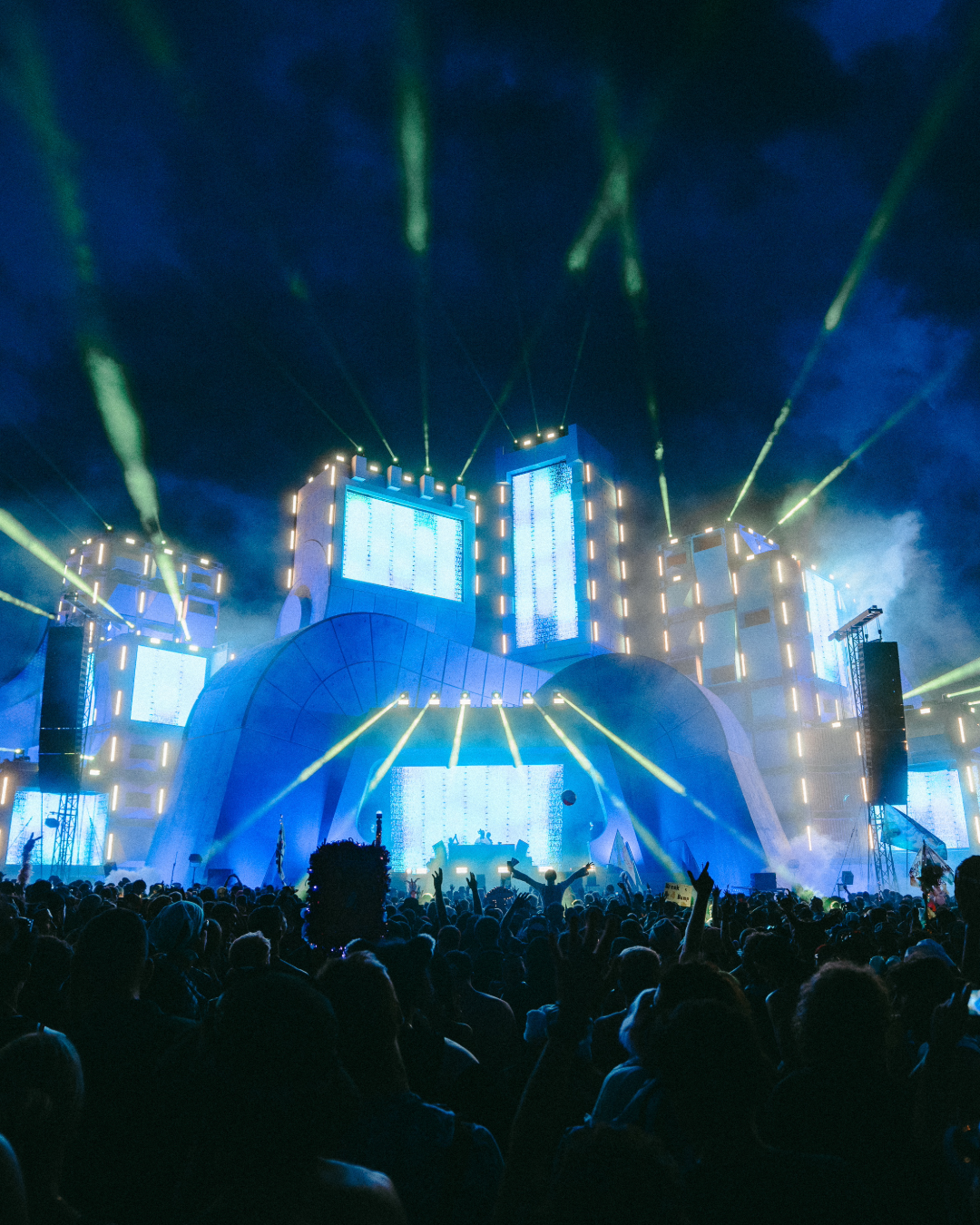
Before Boomtown: The Forgotten Festivals of Matterley Bowl
Ghosts, Raves & Rolling Hills: Why the South Downs Hold Festival Magic
Long before the South Downs echoed with basslines and crowds, these rolling chalk hills were a place of ritual, gathering and shared human experience. From prehistoric ceremonies to wartime speeches and, eventually, landmark music festivals, the land around Matterley Bowl has quietly shaped the way people come together for thousands of years.
Understanding this history of the South Downs matters, because festivals don’t just happen on the land; they happen with it.
To respect the Downs is to recognise that we are temporary guests in a much longer story, and that caring for the land is essential if these moments of collective joy are to continue for generations to come.
From Chalk Hills to Dance Floors
A Journey Through South Downs Festival History 🎶
If you’ve ever stood on the rolling chalk hills of the South Downs, you’ll know there’s a certain feeling to this place. Something ancient, something timeless, something that makes music echo a little differently across the hills.
Long before the big stages, laser shows and late-night DJ sets, the Downs were a backdrop to thousands of years of human stories, including prehistoric rituals, wartime gatherings, folklore, myth and community.
Here’s a brief story of how those old chalk hills became the unlikely heartland of some of the UK’s most iconic music festivals and why the landscape itself feels like an essential part of the experience.
Matterley Bowl’s Earlier Lives
Ancient Ground, Wartime Spirits & Local Legend 🕰️
The natural amphitheatre now known as Matterley Bowl (or Cheesefoot Head to locals) feels almost purpose-built for gatherings.
Carved by glacial and geological forces long before humans arrived, its curved slopes and sweeping views make it a natural meeting point.
But its spiritual and historical layers run much deeper…
Prehistoric beginnings
Scattered around the South Downs are Bronze Age burial mounds that show ritual, ceremony and early community gatherings took place here.
Archaeologists believe these communities used the high downs not just for farming, but for seasonal events, rites and storytelling.
So when you stand on those chalk hills at Boomtown, you’re standing on ground that people have been using for thousands of years to come together in celebration.
World War II: From sacred land to rallying point
During the Second World War, the amphitheatre hosted thousands of American troops preparing for D-Day. In June 1944, General Dwight D. Eisenhower stood on the slopes and gave a rousing speech to soldiers before they crossed the Channel.
Many called it one of the most moving addresses they had ever heard.
To imagine that same landscape now filled with festivalgoers is to feel the full arc of history bending through the Bowl.
Folklore and the Downs
The South Downs are full of whispered tales and old countryside lore.
The slopes near Winchester carry stories of hill-spirits, ghostly riders, shadow figures on chalk paths, and whispered voices in the wind. St Catherine’s Hill, not far away, has legends of hidden kings and ancient rituals. Winchester itself has a reputation for hauntings, folklore, and strange sightings. There’s a patchwork of superstition woven into the cultural fabric.
It’s no wonder festivals here often feel charged with something earthy and otherworldly. The land remembers.
The Birth of Festival Culture
How Dance Music Found the Downs ✨
The late 90s were an explosive period for UK dance culture.
Superclubs were booming, electronic music was hitting the mainstream, and festival promoters started looking for new, unusual spaces - places big enough, remote enough, and atmospheric enough to host the next wave of open-air events.
The South Downs were an unexpected but perfect choice.
Creamfields 1998
The very first Creamfields took place at Matterley Bowl in 1998. It drew around 25,000 people and set the tone for what the Bowl could become. Although Creamfields quickly moved north to accommodate growing crowds, its origin story is etched into the Downs.
For one glorious summer, the chalk hills became the centre of the UK dance revolution.
Homelands 1999 - 2005
Then came Homelands, one of the most iconic electronic music festivals of its era.
At its height, Homelands attracted over 50,000 ravers, with line-ups that read like a who’s who of dance culture: the biggest DJs, the most cutting-edge producers, the wildest performers.
The Bowl transformed into a neon-lit sanctuary for clubbers escaping the constraints of the everyday world.
For many people in the South, Homelands was their first taste of large-scale electronic music culture.
Boomtown
A City Rises Among the Hills
If Creamfields was a spark and Homelands was a wave, Boomtown is an entire universe.
Since we settled at Matterley Estate in 2011, we’ve tried to reimagine what a festival can be.
Instead of a big field with stages, we’ve built a fully immersive, theatrical city each year, complete with districts, storylines, characters, hidden venues and a deep lore that unfolds over time.
The Downs became part of the art and helped us create a modern ritual on ancient land
People often describe Boomtown as “transformative,” “spiritual,” even “otherworldly.”
Some of that comes from the land itself. A place that has seen rituals for millennia.
Why the South Downs Still Matter for Festival Culture
The South Downs have played a unique role in British music culture.
In a way, festivals in the Downs feel like a continuation of old traditions. Where people gather on high ground to celebrate, tell stories, dance, and connect. It’s not hard to imagine early communities doing something similar around a fire 4,000 years ago.
These hills aren’t just a backdrop. They’re the main character. The chalk, the history, the folklore, the spirit of the place: it all feeds into the atmosphere that makes festivals here feel different from anywhere else.
The South Downs have always been a place for gathering.
More News